

Summary
| Item | Detail |
|---|---|
| What it is | Quebramar: flat water lagoon at low tide, reef waves at high tide. One of the most versatile spots in Ceará. |
| Highlight | Two spots in one point: flat water and reef waves. Full town with urban infrastructure. |
| When to go | Sep–Nov (peak kite). Feb (Carnival). Apr–Aug (Lençóis lagoons). |
| How to get there | Fortaleza (FOR) ~90 km via CE-085 + CE-041 (~1h20–1h40). Paved road. |
| ATM | Yes — multiple downtown (bring cash as a backup) |
| Signal | Good (all carriers) |
| Accommodation | Downtown or Quebramar area — no lodging at the spot |
Ready to plan? Talk to us — we live here and help you build your itinerary.
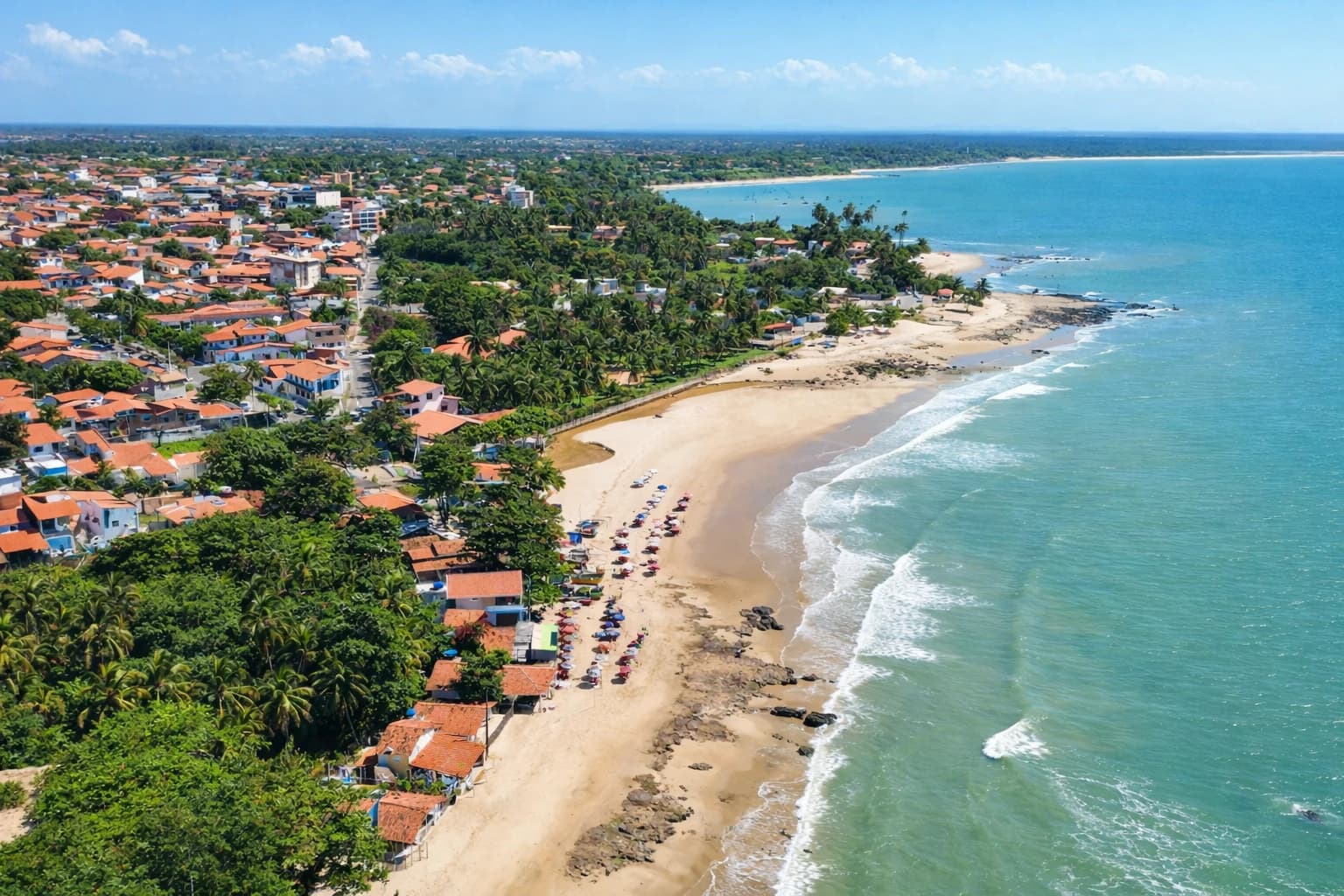
The Quebramar in Paracuru delivers two spots in one: at low tide, a natural reef creates a shallow, obstacle-free mirror lagoon — a few hours of flat water around low water. At high tide, the same barrier generates one of Ceará's best reef-wave points, reaching 2.5 m with good swell. It's one of the few places where you can do freestyle at low tide and surf reef waves at high tide without moving your car from the parking lot.
Quick summary: Dual spot at the Quebramar (flat + waves), ~39,000 inhabitants, five-day Carnival in a 50,000-capacity arena, ~90 km from Fortaleza via CE-085.
What Paracuru Is
Paracuru is a real coastal town — not a village of guesthouses, but an active municipality with ~39,000 inhabitants, shops, nightlife, and one of the liveliest Carnivals in interior Ceará. For kite or surf travelers, this means solid infrastructure (ATM, pharmacies, markets, varied restaurants) without giving up access to world-class spots.
What you'll find:
- The Quebramar, one of the most versatile kite spots in Ceará, with a flat lagoon and reef waves at the same point
- Praia da Pedra Rachada, with deserted natural pools formed at low tide
- Praia da Bica, with four freshwater springs emerging directly from the sand
- Lençóis Paracuruenses — dune field with seasonal lagoons (filled after the rains, approx. Apr–Aug)
- Rio Curu estuary, an 881 ha mangrove preservation area on the border with Paraipaba
- Five-day Carnival in February, with a 17,000 m² arena and national forró and funk acts
- "Paracuru Feito a Mão" craft fair (Fri–Sun, 5 PM–10 PM) at Praça da Matriz
What you WON'T find:
- Quiet, isolated beach within the city — the center is urban and busy
- Protected training lagoon like Cumbuco — the Quebramar's flat water depends on the tide
When to Go
| Period | What to Expect |
|---|---|
| Jul–Jan | Wind window: 15–25 knot trade winds. Cumbuco-to-Paracuru downwinder (~40 km) running |
| Sep–Nov | Kite at the Quebramar at its peak — wind nearly every day, dual tide window per day |
| Feb | Paracuru Carnival — five days in a 50,000-person arena with national forró and funk acts. City packed; book months ahead |
| Apr–Aug | Lençóis Paracuruenses lagoons filled after the rains (varies year to year); they recede toward year's end |
| Mar–Jun | Low wind season. Better waves for board surfing. City quieter |
Tip: The ideal combination is September to November — consistent wind, lagoons still holding water (already starting to drop), and fewer tourists than December–January.
How to Get There
Nearest airport: Fortaleza (FOR) — Aeroporto Internacional Pinto Martins Distance: ~90 km via CE-085 ("Rota do Sol Poente"), with the final leg on CE-041 Estimated time: ~1h20–1h40 depending on Fortaleza traffic
Arriving internationally: Fortaleza is the main gateway to Ceará's kite coast — Air France flies direct from Paris and TAP connects via Lisbon. From Fortaleza, Paracuru is ~90 km via CE-085 (~1h20–1h40).
The route is paved end to end. Leaving Fortaleza via CE-085, you pass through Caucaia and São Gonçalo do Amarante and, on the final stretch, take CE-041 to Paracuru. The road is well-signed and the drive is straightforward.
From Cumbuco, it's ~55 km on the same CE-085 (~45 min). It's a common route for kiters combining both destinations on the same trip or doing the downwinder between the two towns.
Transfer options:
- Rental car from Fortaleza: most practical for those bringing bulky gear
- Private transfer: similar travel time to a personal car; available through local operators — ask at your guesthouse for contacts and updated prices on arrival
- Bus: the 403 line (Vitória Metropolitano) runs Fortaleza–Paracuru direct, departing from Terminal Castro e Silva, in ~2h–2h20 for ~R$17
The Kitesurf Spot: Quebramar
The Quebramar is ~2 km east of the city center, 5 to 10 minutes by car. The submerged reef creates two completely different conditions depending on the tide:
- Low tide: water covers the reef in a shallow band, forming a mirror lagoon with a sandy bottom and no obstacles. The window lasts a few hours around low water (approx. 2h before and 2h after). Ideal for freestyle, beginners, and wingfoil.
- High tide: the sea rises above the reef (~200 m from the beach), releasing waves up to 2.5 m with good swell. Considered by local instructors one of the best reef surf points in Ceará.
Before you go, check the tide window and wind — follow wind and tide in real time at rotainsider.com/condicoes.
There's infrastructure on-site: food, showers, parking, and gear storage. Barraca Quebra-Mar (on location) serves lunch daily.
Lessons and rentals: for those just starting out, there are kite schools and gear-rental spots operating around the Quebramar — the complex itself and the beach barracas host part of this. We don't recommend a specific operator: ask at your guesthouse or barraca, confirm the instructor's certification (IKO standard), and arrange your lesson or rental on arrival. Prices vary by season — confirm on-site.
What to Do
1. Downwinder from Cumbuco to Paracuru
One of the most classic kite routes in the Northeast: ~40 km of coast between Cumbuco and the Quebramar, passing through Taíba. Cross-shore trade winds throughout the route, firm sand, and low reefs that create natural rest points.
Logistics: depart Cumbuco at 9–10 AM with a falling tide. The route takes 2–3h for intermediate riders. Arrange pickup at the Quebramar beforehand — the support car needs to go via CE-085.
Caution: the arrival at the Quebramar has submerged reefs at low tide. On your first time, go with a local guide or someone who knows the spot.
2. Praia da Pedra Rachada — Deserted Natural Pools
About 5 km from the center (12 min by car), Pedra Rachada is the most beautiful contemplation spot in Paracuru. When the tide drops below 0.3 m, the reef exposes natural pools of transparent water with sand and rock bottoms — no crowds, no excessive infrastructure, no beachgoers from Fortaleza.
Access is via a dirt road that passes the Lençóis Paracuruenses. There are simple restaurants at the beachfront. Check the tide table before going: the pool spectacle lasts only a few hours per day.
3. Praia da Bica — Freshwater Springs on the Sand
Five hundred meters from the city center, Praia da Bica has four natural springs (the "bicas") that emerge from rocks directly onto the sand, creating a band of freshwater in the middle of the beach. The beach's name comes from these springs, which flow year-round regardless of rain. It's the most popular swimming spot among locals.
4. Carnival and Urban Cultural Scene
Paracuru has one of the liveliest Carnivals in interior Ceará. The festival happens in February — the dates shift each year, following the liturgical calendar — and centers on the Arena Paracuru Folia, a 17,000 m² space with capacity for 50,000 people. It's five days of programming, with national forró and funk acts. The whole city fills up during this stretch: lodging, restaurants, and transport all run at their limit, and anyone who doesn't book months ahead ends up sleeping in Fortaleza or a neighboring town. If you didn't come for Carnival, this is the week to avoid — the Quebramar keeps working, but the town's logistics get stretched thin.
Outside Carnival, the Praça da Matriz (Igreja Nossa Senhora dos Remédios, from the 19th century) is the heart of the city. Every Friday through Sunday the "Paracuru Feito a Mão" fair takes over the square from 5 PM to 10 PM with local crafts, food trucks, and live music.
Where to Eat
Paracuru has a surprisingly good food scene for an interior coastal town — both in variety and quality. The highest concentration of restaurants is downtown and along the waterfront.
City highlights
- Seafood and Ceará cuisine — The city's historic highlight is seafood cooking. Escargot à la provençale became a signature local dish thanks to the influence of a French chef who settled here decades ago. The annual Escargot and Seafood Festival (July) turns downtown into a gastronomic event.
- Italian cuisine at the Quebramar — A restaurant integrated into the hotel complex near the spot, with reef views. Pasta and seafood menu, mid-to-upper positioning (confirm prices on-site).
- Gastrobar and pizza — Evening option downtown, with all-you-can-eat pizza at an accessible price and caipirinhas. Open late on weekends.
- Home-style Ceará cooking — Neighborhood restaurants with set meals (R$18–30). Concentrated in the residential area near Praça da Matriz.
Practical tip
Lunch at the Quebramar (Barraca Quebra-Mar) is sufficient for intense kite days: daily special, cold drinks, and on-site facilities. For dinner, downtown offers more variety.
Where to Stay
The Quebramar has no accommodation on-site — all kiters stay downtown or in guesthouses between the center and the spot. The drive is short (~5–10 min) and parking at the spot is free.
| Area | Vibe | Best For | Rate (per night) |
|---|---|---|---|
| Downtown | Urban, practical, close to shops and restaurants | Solo travelers, groups, those prioritizing value | R$80–200 |
| Quebramar area | Quiet, kite-focused, specific gear storage | Kiters and wingfoilers in season | R$150–350 |
| Near Pedra Rachada | Isolated, surrounded by dunes and nature | Couples, those seeking more quiet | R$180–400 |
Prices vary by season. Carnival (February) has premium rates — book months in advance. Easter week also fills up.
Plan your trip to Paracuru
Tides, routes, vendors — everything you need to plan.
12
places mapped
3
access routes
Real-time tides
3
verified vendors
Know someone planning this trip? Send it their way.
Practicalities
- ATM: Yes — multiple banks downtown (Bradesco, Banco do Brasil, Lotérica); even so, they can go out of service — bring cash as a backup
- Cell signal: Good throughout the city and at the Quebramar (Claro, Vivo, TIM, Oi)
- Wi-Fi: Available at most guesthouses and downtown restaurants
- Access: CE-085 fully paved — regular car, no problem
- Gas: Gas stations downtown
- Pharmacies: Yes, downtown
- Markets: Full supermarkets — Paracuru has all the infrastructure of a mid-sized town
About the Quebramar: The spot is ~2 km from the center. By car it's 5 min; by rented buggy, the ride is more fun. Barraca Quebra-Mar offers food, showers, parking, and gear storage (prices vary by season). There's no accommodation at the spot — the standard logistics: guesthouse downtown, breakfast, drive to the spot.
Lençóis Paracuruenses: Access to the dunes with lagoons is via the Pedra Rachada road. Buggy tours (~2h) depart from downtown daily; ask at your guesthouse about local operators. Best time: the lagoons fill after the rains (approx. Apr–Aug, varies by year) and recede toward year's end.
Frequently Asked Questions
What's the difference between low tide and high tide at the Quebramar?
At low tide, a submerged reef becomes exposed and shelters a band of shallow water, creating a flat water lagoon — perfect for kite freestyle, beginners, and wingfoil. This window lasts a few hours around low water. At high tide, the sea rises above the reef and releases waves up to 2.5 m, turning the same point into one of the best reef surf points in Ceará. The secret of Paracuru is that these two spots share the same address.
How do I get to Paracuru from Fortaleza?
Via CE-085 ("Rota do Sol Poente"), paved, ~90 km from central Fortaleza, with the final leg on CE-041. Average travel time is ~1h20–1h40 depending on traffic at the start. It's the same highway as Cumbuco — Paracuru is ~55 km beyond Cumbuco in the same direction.
Is there an ATM and pharmacy in Paracuru?
Yes. Paracuru is a town of ~39,000 inhabitants with full infrastructure: multiple ATMs (Bradesco, Banco do Brasil), pharmacies, supermarkets, and gas stations — all downtown. Even so, bring some cash as a backup: the ATMs can go out of service. In smaller villages like Lagoinha or Taíba there's no ATM at all — there, cash is essential.
When is Paracuru Carnival and is it worth going?
Paracuru Carnival happens in February, and the dates shift every year with the liturgical calendar — confirm before booking flights. It's five days of festivities centered on the Arena Paracuru Folia, a 17,000 m² space with capacity for 50,000 people, where national forró and funk acts perform. If you enjoy lively Carnival outside the Salvador and Rio circuit, Paracuru is one of the best options in the Northeast. The city fills up — book accommodation months in advance.
Is the Cumbuco-to-Paracuru downwinder safe for intermediate riders?
The ~40 km route is technically accessible for intermediate riders with good kite control in winds up to 25 knots. The stretch between Taíba and Paracuru has submerged reefs on arrival at the Quebramar — this is the only point that requires attention to tide reading. On your first time, go with someone who knows the spot or hire a local guide. The Cumbuco departure is straightforward and the cross-shore wind maintains a good angle throughout the route.
Read Also
- Cumbuco — Birthplace of kite in Ceará, starting point of the classic downwinder
- Taíba — Kite village on the route between Cumbuco and Paracuru
- Lagoinha — Red cliffs and coconut groves, waypoint on the Paracuru–Guajiru downwinder
- Flecheiras — Wild coast to the west, waves and dunes without infrastructure
- Wind and tide conditions — Real-time forecast to plan your day at the Quebramar
- Route of Emotions (Rota das Emoções) — The corridor route connecting the coast's destinations
Last updated: August 2026