

Summary
| Item | Detail |
|---|---|
| What it is | A kite beach near Jericoacoara, with schools and guesthouses |
| When to go | Jul–Jan (kite), peak Sep–Nov. General tourism year-round |
| How to get there | Fortaleza (FOR) + ~4h transfer to Jijoca + 15 min to Preá |
| Differentiator | Beachfront kite schools and downwinds to Jeri |
| ATM | Yes (limited) |
| Signal | Moderate |
Ready to plan? Talk to us — we live here and can help you build your itinerary.
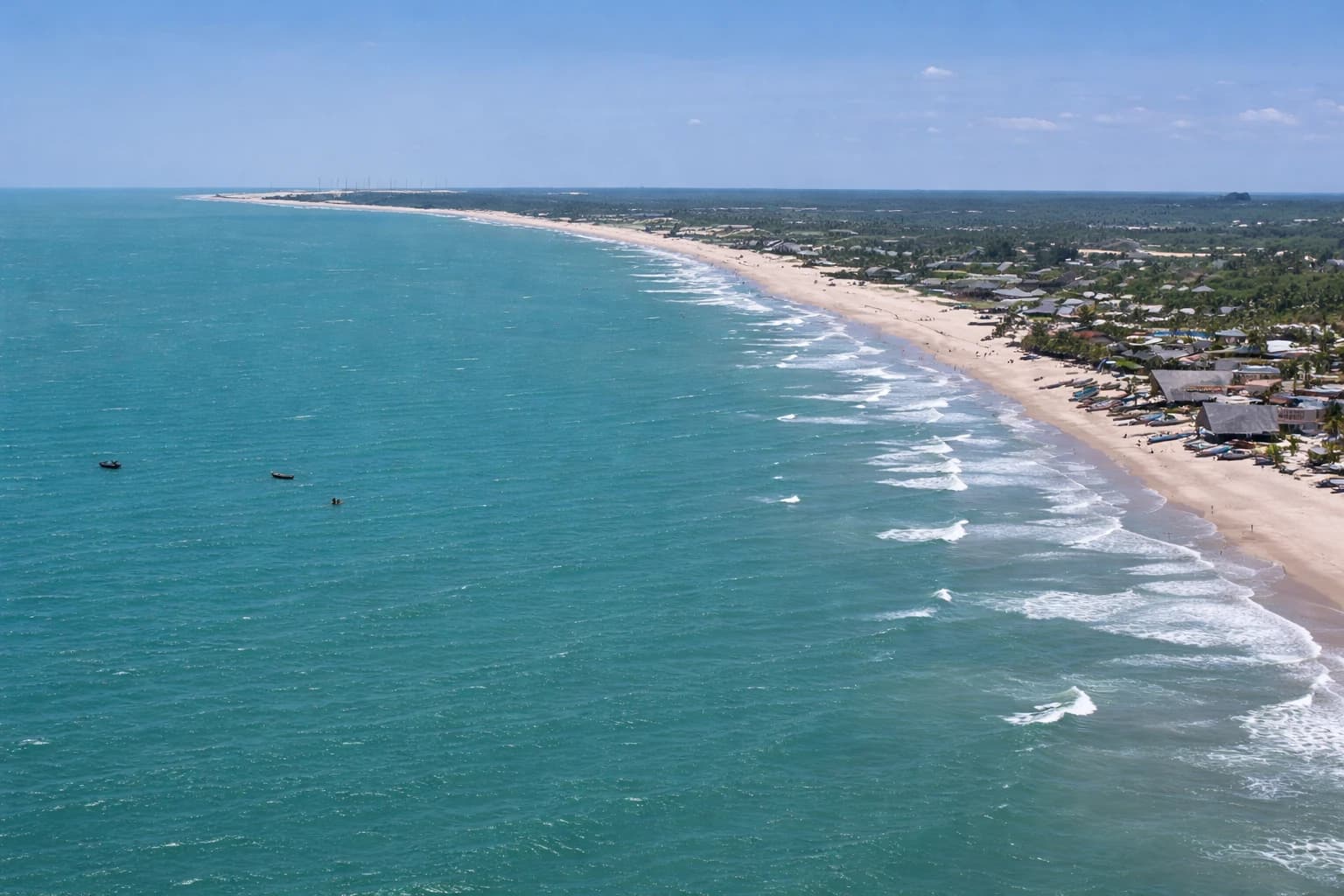
Preá is near Jericoacoara, on the coast of Ceará. Kitesurfing is the beach's main focus, with schools and beachfront guesthouses. This guide brings together tips for exploring the village, planning lessons and fitting Jeri into your itinerary.
The question everyone asks: Preá or Jeri? The answer depends on what you're looking for. Jericoacoara is the complete village — nightlife, restaurants, lagoons. Preá is more focused: people come here for kitesurfing and a quieter vibe. In recent years, a cycle of high-end investment has been transforming the village, with luxury guesthouses, new restaurants and growing infrastructure — but Preá still keeps the pace of a small beach town.
Quick summary: A kite beach near Jericoacoara, with schools, guesthouses and downwind options. A guide to planning lessons and choosing where to stay.
When to Go
For Kitesurfing
| Period | What to Expect |
|---|---|
| Sep–Nov | Peak wind — 5–9 m² kites, world championship conditions |
| Jul–Aug | Start of season — consistent winds, beaches less crowded than peak |
| Dec–Jan | End of season — wind still good, more holiday tourists |
For General Tourism
Preá works year-round, but between February and June the winds drop and the village gets quieter. This is the low season — lower prices, less movement, good for those who don't depend on the wind. From July onward, the village comes alive with the arrival of kiters.
Tip: September–October is the sweet spot — strong wind, fewer people, lower prices than the July–August peak.
How to Get There
Nearest airport: Jericoacoara (JJD) — ~40 min by 4×4 Main alternative: Fortaleza (FOR) — ~4h30 by transfer (including the Jijoca changeover)
The most common route is the same as for Jericoacoara: fly to Fortaleza, then road transfer (~4h) to Jijoca de Jericoacoara. From Jijoca, it's just 15 minutes by jardineira (4×4 truck) or 4×4 to Preá — closer than Jeri itself. Those flying directly into Jericoacoara airport (JJD) arrive in ~40 minutes by 4×4.
The CE-182 road was recently paved, so car access to the Preá junction is easy. From there, the final stretch is sand — 4×4 or transfer required.
What to Do
1. Kitesurfing — Schools and Lessons on the Beach
Kite schools are part of everyday life at Praia do Preá — check wind and tide information at rotainsider.com/condicoes. The village has schools for all levels — from first-timers who've never stood on a board to advanced riders training freestyle. Equipment rental is available at virtually every school on the beach.
2. Downwinder Preá → Jericoacoara
The classic. It's ~12 km of downwind riding, passing deserted beaches and Pedra Furada — the most photographed rock arch in Ceará. It's the most iconic introductory ride in Northeast Brazil and works for intermediate kiters and above. Preá's schools organise the downwinder daily in season.
3. Lagoa de Jijoca
A few minutes from Preá, Lagoa de Jijoca is a freshwater lagoon surrounded by dunes. Great for swimming, stand-up paddleboarding and a break from the wind. In the rainy season (March–June), the water level rises and the lagoon becomes even more beautiful.
4. Day Trip to Jericoacoara
Preá is just 15 minutes from Jeri by jardineira (4×4 truck). You can go in the morning, have lunch, climb the Duna do Pôr do Sol and return at the end of the day — or vice versa. Many kiters staying in Preá make this day trip to enjoy Jeri's nightlife and restaurants.
Where to Eat
Preá doesn't have Jericoacoara's gastronomic variety, but the scene is evolving fast. There are already good beachfront options — from restaurants with creative menus to simple stalls serving fresh fish and açaí. Standards are rising alongside the village's growth.
In general, expect to spend between R$ 40–80 per meal at the more established restaurants and R$ 20–40 at simpler options. For a full dinner with drinks, the range is R$ 80–150 per person.
If you want more options, Jericoacoara is 15 minutes away — and has everything.
Where to Stay
| Zone | Vibe | Best For | Price Range |
|---|---|---|---|
| Beachfront | Feet in the sand, direct access to the kite spot | Kiters, couples, those who want premium | R$ 400–1,200/night |
| Village | Sandy streets, simpler, close to everything | Budget travellers, backpackers | R$ 150–400/night |
| Near Jijoca | Easy car access, more practical | Families with a car, those who want mobility | R$ 200–500/night |
The beachfront zone is where the high-end guesthouses are — many with a bed-to-board model (you walk straight from your room to the kite spot). It's the most expensive zone and the first to sell out in high season. Book at least 2 months in advance between July and November.
The village has more affordable options, with smaller guesthouses and chalets. The finish is less polished, but the location is central and you're a few minutes' walk from the beach.
For those arriving by car, the near Jijoca zone offers paved road access and easy parking — but requires a transfer or 4×4 to reach the beach.
Plan your trip to Preá
Tides, routes, vendors — everything you need to plan.
4
places mapped
1
access route
Real-time tides
6
verified vendors
Know someone planning this trip? Send it their way.
Practicalities
- ATM: Yes — there's an ATM in the village, but limited. Bring cash from Jijoca or Fortaleza as backup.
- Mobile signal: Moderate — works in most areas, but may drop in specific spots.
- Wi-Fi: Only at guesthouses and restaurants. Don't count on a stable signal outside them.
- Access: Paved road via CE-182 to the junction, then 4×4 or transfer to the village.
- Cash: Many places accept cards, but having cash is essential for stalls and smaller services.
- Pharmacy/shop: Basic in Preá. For bigger purchases, go to Jijoca (15 min).
Frequently Asked Questions
Preá or Jericoacoara — which to choose?
It depends on what you're looking for. Preá is for those who want world-class kitesurfing, tranquillity and a more exclusive vibe. Jericoacoara has more infrastructure — restaurants, nightlife, lagoons, activities for non-kiters. The good news: they're 15 minutes apart, so you can enjoy both.
Can non-kiters enjoy Preá?
Yes, but with adjusted expectations. The beach is beautiful, Lagoa de Jijoca is excellent, and the day trip to Jeri is always available. But Preá is, first and foremost, a kite village — if you don't practise any wind sport, Jericoacoara is probably a better base.
How to get from Jericoacoara to Preá?
By jardineira (4×4 truck) along the beach — it takes about 15 minutes. The jardineiras run several times a day. You can also go by buggy or, for kiters, do the downwinder by kite.
Is Preá expensive?
Preá is getting pricier with the growth of luxury tourism, but there are still options for different budgets. High-end beachfront accommodation can exceed R$ 1,000/night, but the village has guesthouses from R$ 150. Food ranges from R$ 25 (beach stall) to R$ 150 (full dinner).
What's the mobile signal like in Preá?
Moderate. It works in most areas of the village, but don't expect stable 4G all the time. Wi-Fi at guesthouses is usually reasonable. If you need to work remotely, it's worth checking the Wi-Fi quality of your accommodation before booking.
Read Also
- Jericoacoara — The complete village: lagoons, nightlife, kite
- Fortaleza → Jericoacoara — How to reach the corridor (Preá is on the way)
- Complete Route of Emotions (Rota das Emoções) — Preá within the epic Northeast itinerary
- Guriú — Photogenic dry mangrove and flat water at the river mouth
- Icaraí de Amontada — Quiet kite spot further east
- Ilha do Guajiru — One of Northeast Brazil's largest lagoons, perfect flat water
Last updated: July 2026