

I want to try it: do I need to take a course?
You can discuss a standalone introductory experience with the school, planned as your first taste of the sport. It is an option for visitors who want to discover kitesurfing in Atins without dedicating their trip to learning to ride.
Say so at the start of the conversation: “I would like to try kitesurfing during my holiday.” In Atins, this first experience usually includes an introduction to the equipment and initial kite-control exercises. The instructor adapts the activities and pace to you and the day's conditions. Exercises are agreed with the school, and progress depends on each person and those conditions.
For example: if your accommodation and excursions are booked but you have a free afternoon, you could ask: “Could I try kitesurfing in that time? How much time should I set aside, and what would the session involve?”
The aim is to discover the sport. An introductory session does not guarantee that you will be able to ride by the end, and does not in itself commit you to a full course. If you enjoy it and want to continue, discuss the next steps.
I want to learn or pick up where I left off
If you are traveling to learn, explain how many days you will have in Atins and discuss a series of lessons. If you have taken lessons before, describe your experience: when your last session was, what you practiced and what you find difficult.
To compare options, ask:
- How do private and shared lessons work?
- What equipment is included?
- Which languages can I take lessons in?
- Where does the lesson take place, and how do I get there?
- How do changes in conditions affect the arrangements?
The proposal should start with your level and the time you have. The number of hours in a course alone does not guarantee independent riding. For progression lessons, a specific goal is more useful than simply asking for an “advanced lesson”: explain which skill or trick you would like to work on.
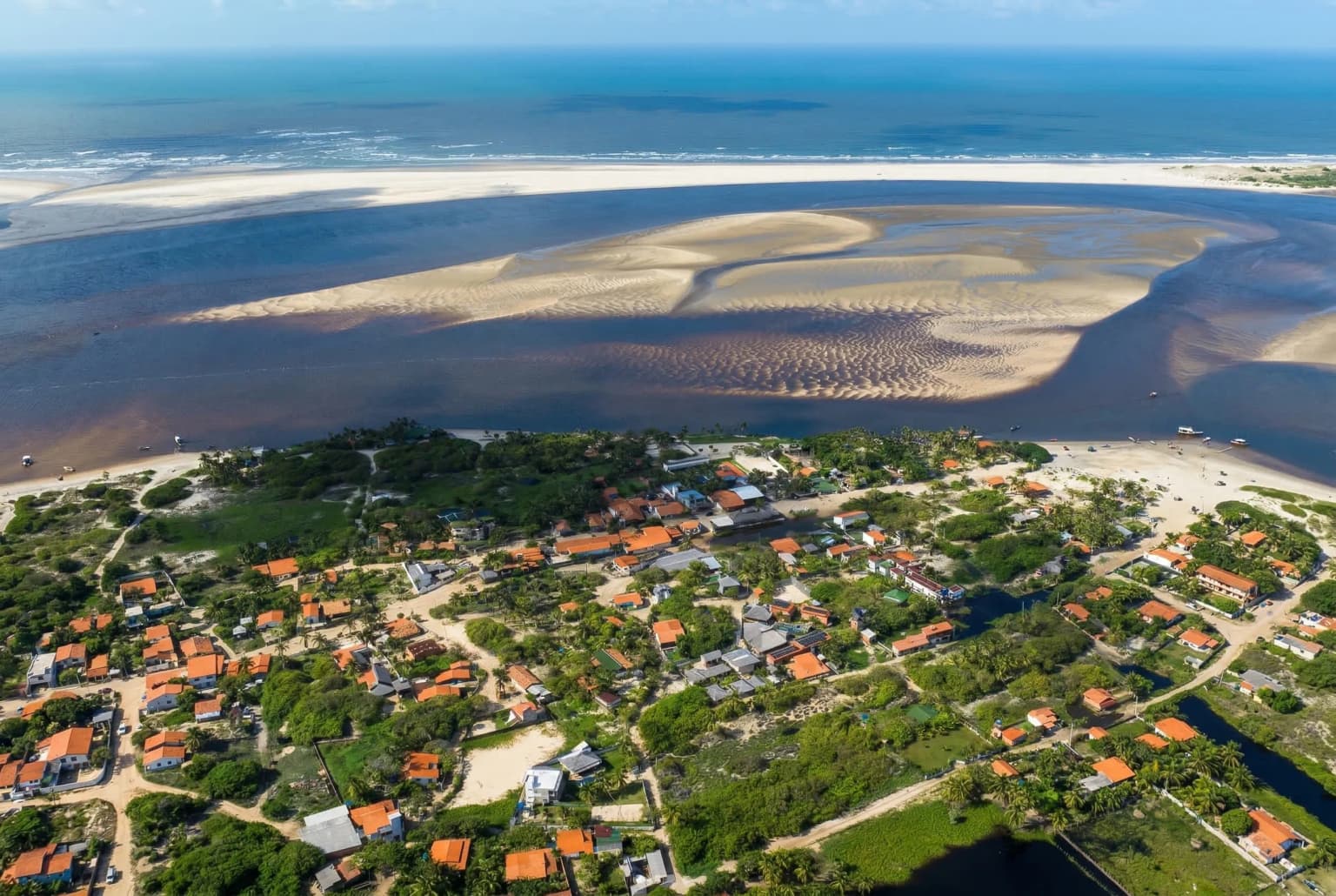
The river mouth at Atins · the tide reshapes the sheltered water
River mouth, ocean and lagoons: three different settings
At the river mouth: sheltered water and tides
Between the beaches and sandbanks, there are areas of smoother water, often called flat water. The tide changes the layout and conditions of these areas. Atins has sheltered water throughout the year, with variations linked to both the tide and the season. The presence of these areas does not mean there is reliable wind all year.
On the ocean side: waves and open beach
On the ocean side, the beach faces the open sea and its waves. It offers a different riding experience. Tell the school or operator which board you use, what you already do and what you want from the session. The general description of the river mouth should not automatically be applied to the open beach.
In the Lençóis lagoons: a seasonal trip
Some trips take you to specific lagoons within the park, where water levels follow rainfall and the time of year. Based on local experience, lessons and downwind trips may be possible until October, depending on the lagoon and that year's conditions. The lagoon authorized for the activity and the trip format need to be confirmed with the operator.
There is official recognition of kitesurfing areas within the park: the 2026 ICMBio accreditation notice explicitly mentions the activity at Lagoa da Pininga, in the Atins area. This does not mean that every lagoon is available for riding.
When is the best time to kitesurf in Atins?
July to December is the main wind season for planning a kitesurfing trip. June and January can also offer sessions, but conditions are less predictable. This is a guide for choosing dates, without a guarantee of wind every day.
That window does not describe the water in every area: the tide changes the river mouth, while the Lençóis lagoons have their own seasonal patterns. For the days of your trip, check the wind and tide forecast and discuss the location and activity with the school.
Local sources describe slightly different windows: Atins.me gives July to December, while Maresia extends its period into January. The distinction between the main season and transition months incorporates the experience of people who live and ride here.
I already ride: how can I make the most of Atins?
Explain what you are looking for: getting to know the riding areas, returning to the water after a break, working on a trick, riding waves, finding equipment to rent or organizing a downwind.
On your first visit to Atins, you might be looking for:
- A short downwind: you want to explore the area while riding with the wind, with different start and finish points. The route, support and return arrangements are agreed with the operator.
- A riding session: you want some time on the water in an agreed area, perhaps with rented equipment.
- Exploring the riding areas with someone local: you already ride, but would like to explore Atins' riding areas with someone from the region. Explain that this is the purpose of the outing.
These examples help explain what you are looking for; the operator confirms which format they can offer.
If you ride a foil, include that in your request so the specific options can be confirmed. The conversation is more useful when you describe your skills and equipment, as well as saying whether you are a beginner, intermediate or advanced rider. For a downwind, also confirm the level required by the operator.
If a downwind is your priority, compare options leaving or arriving in Atins, with the arrangements to discuss for each format.
How to fit kitesurfing into your trip
If you have already booked accommodation and excursions, share the days and times you have free. If learning is the priority, explain that before fixing your entire itinerary. In both cases, the school confirms what format is possible during your stay.
If your dates are fixed between November and March, check them against the wind season above before you decide how much of the trip to build around kitesurfing:
- November or December falls in the main season, so you can build the trip around kitesurfing. Before you book the rest, ask the school where it rides at that time of year, what happens on a day without enough wind and how many days to allow.
- January is a transition month. Kitesurfing can still be part of the trip: leave spare days and keep other plans that don’t depend on wind.
- February or March falls outside that window. Plan the trip around other things and ask the school whether a session is realistic on your dates.
Seeing the Lençóis lagoons is a separate decision from planning for wind. The wind season and the lagoon season only partly overlap, so dates that suit one may not suit the other. For what to expect at the lagoons, see the section on dates between November and March in our guide on when to visit the Lençóis. When you write to us, say which days you want to keep for the lagoons or other outings.
To organize the rest, read the Atins guide, explore the village and see how to get there from Barreirinhas. To compare Atins with other bases, return to our Rota das Emoções kitesurfing guide.